Here’s the uncomfortable truth about tactical training: you can’t fully prepare for what you don’t anticipate.
Conventional training programs are necessarily designed around known scenarios — the situations that history, doctrine, or institutional experience says are most likely. This is sensible. You have limited training hours, limited budget, limited resources. You prepare for the probable.
But real-world operations have a way of presenting the improbable. The hostage situation that turns into a crowd control problem. The building clearance that encounters civilian non-combatants where the intelligence said there would be none. The VVIP protection detail that encounters an active threat at the exact moment the principal is most exposed.
You can’t brief your way through these scenarios. You have to have been inside something close enough to recognize the shape of the problem when it arrives.
This is where KOMINA’s scenario architecture becomes genuinely valuable for virtual training for military and law enforcement.
A Library Built for Real Operations
KOMINA’s pre-built scenario library covers the tactical situations that Indonesian and Southeast Asian defense and law enforcement organizations actually face.
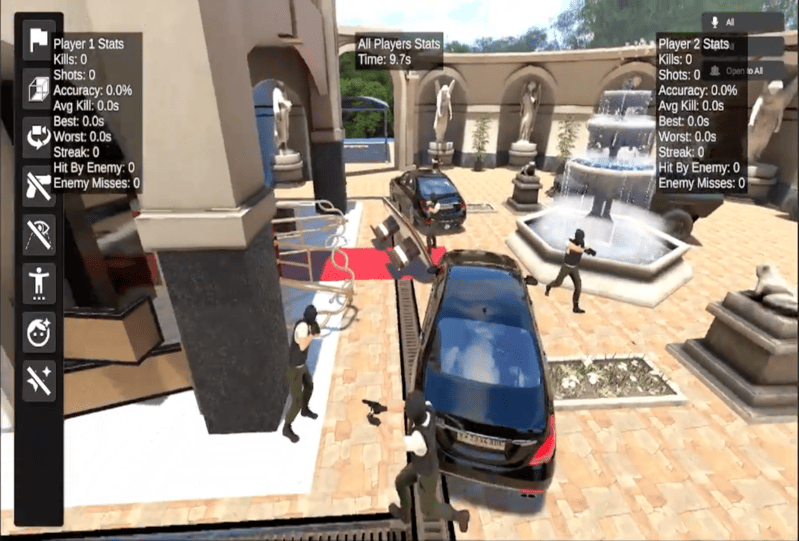
Drug raid operations present high-risk entry situations in residential and commercial environments with hostile threats — one of the most dangerous and legally complex scenarios in law enforcement. VVIP protection scenarios run close protection drills with live threat assessment and rapid response protocols, training the kind of peripheral awareness and decision speed that bodyguard work demands.
Hostage response scenarios are rated at the highest complexity level — they should be, given that the cost of error in real hostage situations is often irreversible. Trainees move through negotiation decision trees as well as tactical entry options, experiencing the tension between those two approaches in a way that no classroom case study can replicate.
Close quarters battle puts personnel into urban combat in confined spaces with multiple hostile contacts. Building clearance runs systematic room-by-room procedures with unknown threat profiles and civilian presence. Crowd control scenarios build the de-escalation and escalation management skills that policing in public environments increasingly requires.
Each scenario is calibrated for a specific complexity and stress level, and each can be adjusted by the instructor in real time based on how the team is performing.
The Sandbox: When the Pre-Built Library Isn’t Enough
Pre-built scenarios cover the common ground. The sandbox environment is for everything else.
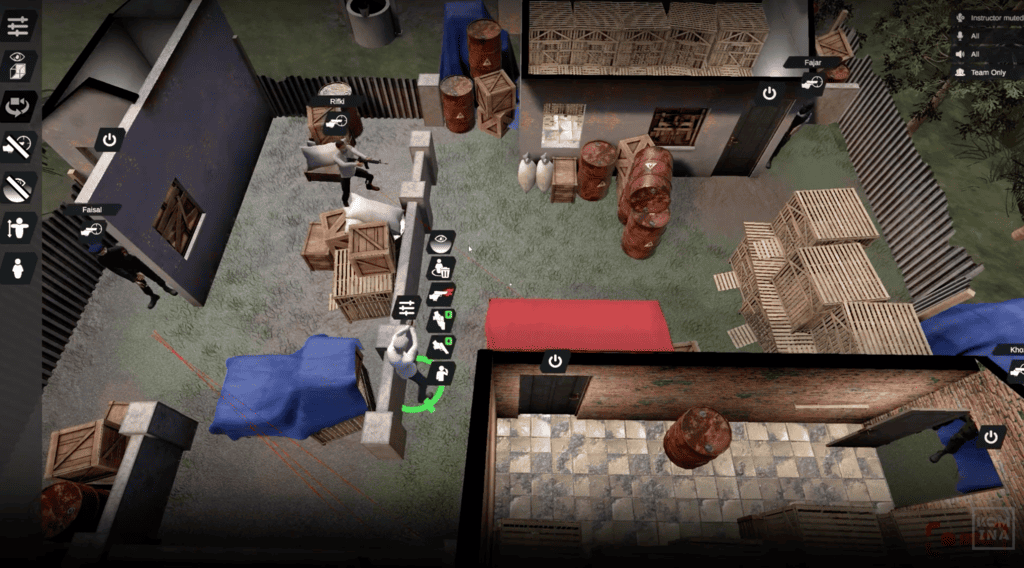
KOMINA’s sandbox gives instructors the ability to modify every meaningful parameter of the training environment in real time. Weather conditions, lighting, threat density, NPC behavior patterns, objective sequences — all of it is adjustable without pausing the exercise. An instructor can introduce a new hostile contact, change the lighting to simulate a power outage, or shift the wind conditions to affect exterior scenarios mid-session.
This real-time flexibility serves several important training purposes.
First, it prevents scenario familiarity from becoming a performance crutch. Trainees who run the same scenario repeatedly begin to anticipate, rather than actually read, the tactical situation. The ability to vary conditions ensures that performance reflects genuine situational awareness rather than pattern recognition.
Second, it allows instructors to stress-test specific skills in isolation. If a team is performing well overall but shows a weakness in tactical communication when visibility is compromised, the instructor can set up a series of low-light, high-density scenarios that specifically target that gap.
Third, it enables the construction of entirely new scenarios that match specific upcoming operational requirements — a capability that no static training library can provide.
The Map Editor: When Reality Is the Training Environment
For certain organizations and missions, the training environment needs to match a specific real-world location.
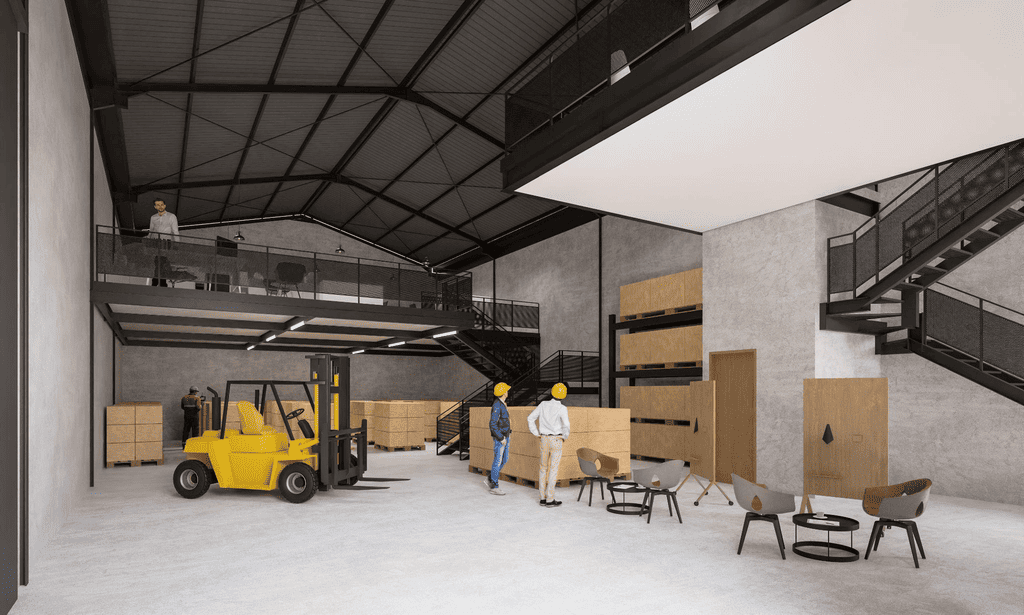
KOMINA’s advanced map editor supports construction of custom environments from scratch, including environments based on actual buildings or terrain that an operation will require. The structure builder allows instructors or training designers to model buildings with accurate dimensions, room layouts, and structural features. The terrain editor shapes outdoor environments with precise elevation, vegetation placement, and obstacle geometry.
Access to thousands of 3D assets — furniture, vehicles, equipment, props — means that environmental detail can reach a level of fidelity where personnel who will eventually operate in the real location are effectively pre-familiarized with it in virtual space.
NPC spawner tools allow placement and configuration of AI characters throughout the environment with individualized behavior profiles. The same location can be populated differently for different training runs — high civilian density for crowd management scenarios, concentrated hostile presence for entry scenarios, a mix for complex compound clearance situations.
The AI Agents: Opponents That Think
The scenario architecture is only as good as the opponents and non-combatants that populate it.
KOMINA’s spawnable agents aren’t scripted NPCs that follow a fixed behavioral sequence. They respond to trainee actions in real time, using AI behavior systems that produce genuinely variable responses.
Hostile agents operate with adjustable tactical intelligence — from low-skill, panicked responses to organized, coordinated threat behavior including ambush tactics and defensive positioning. The same scenario run against high-intelligence hostiles feels categorically different from the same layout with panicked, disorganized opponents.
Civilian agents exhibit panic, compliance, or unpredictable behavior, introducing the ethical and tactical complexity that real-world operations always carry. Law enforcement personnel learning to distinguish threats in a crowd — and to manage the protection of non-combatants while neutralizing actual threats — benefit enormously from training environments where civilian behavior is genuinely variable.
Friendly force agents support coordination and backup scenarios, allowing teams to practice integrated operations with AI-supported units.
The result is a training environment that resists mastery through repetition — one that remains genuinely challenging regardless of how familiar a trainee becomes with the base scenario architecture.
Preparing for the Improbable
The measure of a training program isn’t how well personnel perform in situations they’ve been directly prepared for. It’s how they perform when the situation deviates from the plan — as operational situations always, eventually, do.
KOMINA’s combination of pre-built scenarios, real-time sandbox modification, custom map construction, and adaptive AI behavior gives instructors the tools to expose personnel to a genuine diversity of tactical situations. Not the same five scenarios in rotation. Not exercises that trainees have pre-adapted to. Genuinely novel challenges that demand real situational assessment and genuine decision-making.
That’s the training environment that produces personnel who are ready for the improbable.
Explore KOMINA’s full scenario library and sandbox capabilities at https://komina.co/