Everyone focuses on getting out of the building. Almost no one trains for what happens after. An evacuation isn’t finished when people leave the doors — it’s finished when every person has reached the right assembly point and been confirmed safe. Yet the muster-and-count phase is the most neglected part of nearly every evacuation plan: people scatter, drift to the wrong spot, wander off to “check on” someone, and the headcount becomes a guess. VR safety training for fire evacuation can drill this overlooked final phase the same way it drills the escape itself.
The phase everyone skips
A typical drill ends the moment people are outside. They mill around, the alarm stops, everyone goes back in. The most consequential question — is everyone actually here and accounted for? — is rarely tested with any seriousness. So in a real fire, predictable failures appear: people assemble at the wrong point, or in scattered groups; some leave the area to find a colleague or fetch their car; and the person responsible for the count has no reliable way to know whether a missing face means “still inside” or “went to the car park.”
That uncertainty is dangerous in both directions. If the count wrongly suggests someone is missing, responders may enter a burning building to search for a person who is safe. If it wrongly suggests everyone is out, a person genuinely trapped inside may not be looked for. The muster and headcount exist to remove that uncertainty — and they only work if people are trained to do them properly.
What VR can rehearse
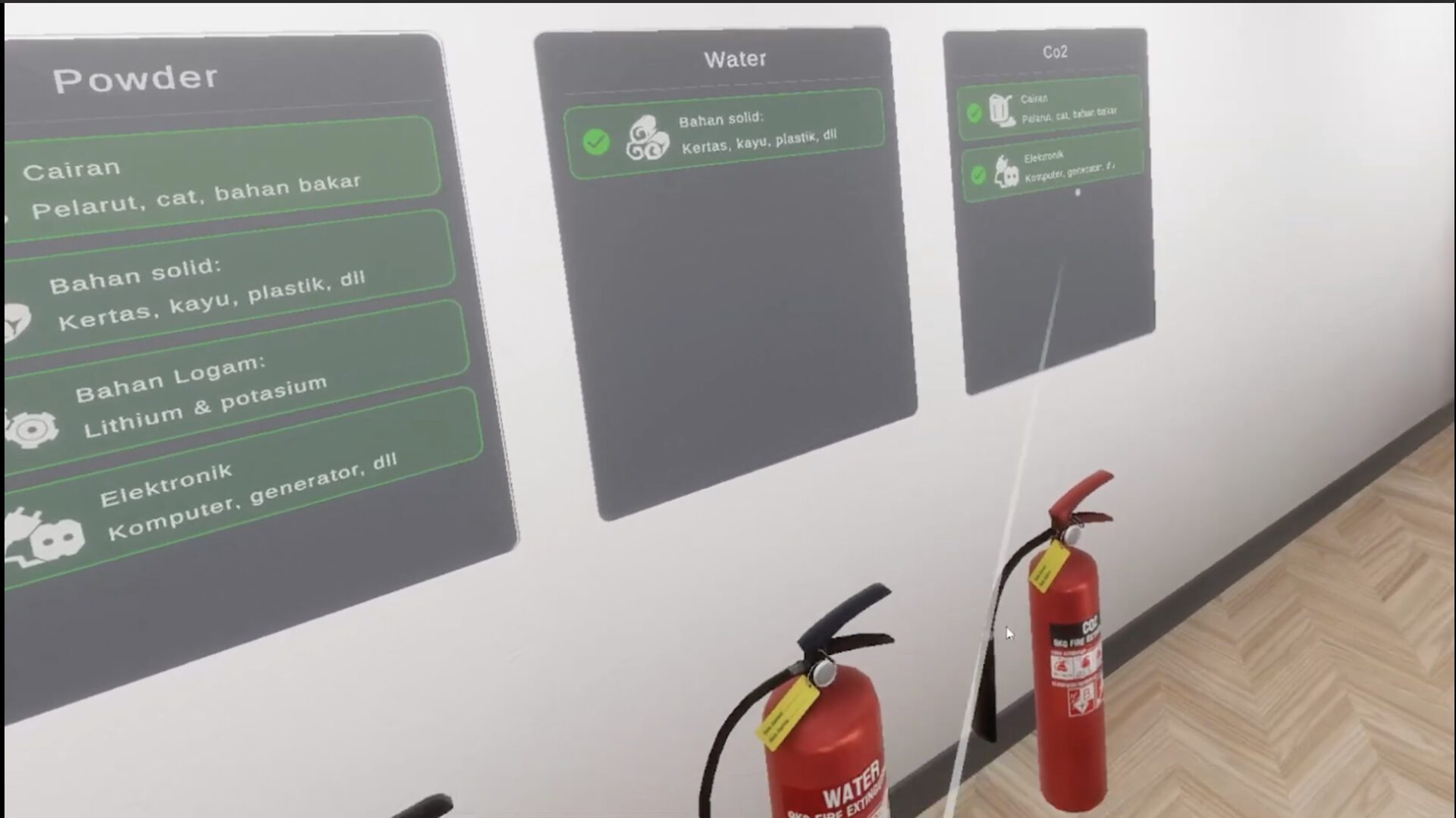
A VR fire evacuation scenario can extend past the doors to the assembly phase: reaching the correct muster point, staying there, and completing an accurate headcount under pressure. Workers rehearse going to the right place and remaining accounted for; those responsible for the count rehearse confirming everyone’s presence and recognising when someone is genuinely unaccounted for.
Indonesian developer VGLANT builds evacuation scenarios as a complete sequence rather than a walk to the door, so the assembly and accountability phase gets practised instead of assumed. A workforce that has rehearsed mustering and counting treats the assembly point as the real finish line — and understands that drifting off or going to the wrong spot isn’t harmless, it’s what breaks the count that could save a life.
Discipline at the assembly point
The core lesson is that the evacuation isn’t over until the count says so. That requires discipline most people don’t naturally have in the relief of being outside: go to the assigned point, stay there, make yourself accounted for, and don’t wander. Rehearsing that discipline turns the muster point from a vague gathering into a reliable system — one where a missing name means something definite, and responders can act on it with confidence.
The honest limit
VR doesn’t replace the physical drill, the real assembly points, or the actual accountability procedures a site must establish. Live drills test the real geography and the real roll-call process in ways a simulation can’t. VR builds the discipline, the habit, and the understanding of why the count matters — it complements the physical drill rather than replacing it.
But it fixes the weakness that quietly undoes otherwise good evacuation plans: everyone trains to get out, and no one trains to be counted. By drilling the muster and headcount as part of the escape, VR makes sure an evacuation ends where it should — with certainty that everyone is safe.
Getting out is half an evacuation. Being counted is the other half. VR trains the part that confirms nobody was left behind.