The “Freeze” Effect: Why Traditional First Aid Training Fails
First Aid is a skill that demands two things simultaneously: technical knowledge and emotional composure. Most employees have attended a traditional first-aid workshop—usually involving a PowerPoint presentation and a brief demonstration on a static mannequin. However, when a real medical crisis occurs in the workplace, many of these same individuals “freeze.”
The reason is simple: traditional training lacks the high-pressure environmental context of a real emergency. addresses this psychological barrier by placing the trainee in a Real-Time Interactive Scenario that mimics the sensory intensity of a life-or-death situation.
Active Learning: Training the Brain for Split-Second Decisions
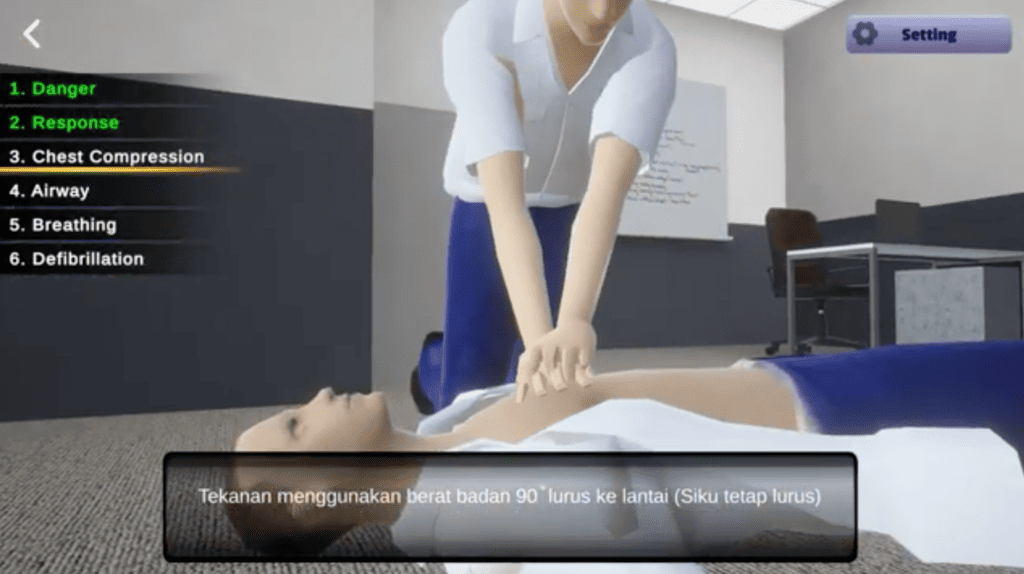
Unlike passive learning, where information is merely absorbed, VR First Aid is rooted in Active Learning. In the VGLANT environment, the trainee is the primary responder. They aren’t just watching a video on how to treat a wound; they are virtually standing over a casualty, hearing the ambient noise of a busy factory or office, and feeling the “ticking clock” of an emergency.
Our VR First Aid modules force users to make critical decisions under pressure:
Scene Assessment: Identifying hazards before approaching the victim (e.g., electrical wires or moving machinery).
Injury Prioritization: Assessing consciousness, breathing, and severe bleeding in a chaotic environment.
Procedural Accuracy: Performing CPR or applying a tourniquet using interactive haptic controllers that require correct movement and timing.
This immersive approach ensures that the practical knowledge sticks. By engaging multiple senses, the brain encodes the training as a “lived experience,” making the transition to a real-world response significantly smoother and faster.
From Manuals to Motion: Converting SOPs into Immersive Scenarios
Every industry has its own specific medical risks. A construction site may prioritize fall-related trauma, while a commercial kitchen may focus on severe burns and lacerations. VGLANT’s Bespoke Services allow you to transform your company’s specific Safety Operating Procedures (SOPs) into custom VR scenarios.
Instead of reading about how to handle a chemical splash in a manual, your team can physically practice the response in a virtual replica of your lab or warehouse. This Mission-Specific Training ensures that your first responders are not just “certified,” but truly ready to provide life-saving assistance in the exact environment where they work every day.
The All-in-One Pelican Case: Deploying Readiness Anywhere
Training a large, decentralized workforce is often a logistical nightmare. VGLANT simplifies this with our All-in-One Pelican Case. This portable solution includes a high-spec PC, built-in HD monitor, and integrated audio, allowing you to bring world-class first-aid training to any location—from a remote mining site to a corporate boardroom.
With this portable system, you can:
Scale Training: Train multiple shifts and departments without the need for external training facilities.
Maintain Standards: Ensure every employee receives the exact same high-quality, standardized curriculum.
Zero Risk: Practice high-stakes medical procedures in a safe, controlled virtual environment.
Data-Driven Composure: Tracking Performance
How do you measure a person’s ability to remain calm? VGLANT provides an Administrator Dashboard that offers detailed Tracked Data Records. Safety managers can monitor:
Accuracy: Did the trainee apply pressure to the correct area?
Timing: How long did it take to begin chest compressions?
Decision Accuracy: Did they follow the correct emergency protocol sequence?
These actionable insights allow organizations to identify training gaps and provide targeted coaching, ensuring that when professional help is minutes away, your team has the skills and the composure to bridge that gap.